• Home
  • MGM’s Photos
    • Fashion/Glamour
    • Nudes
    • Street
  • Shoutouts
  • Reviews
  • Interviews
  • Commentary
  • About
  • Contact

Michael Grace-Martin

~ Photography, Art & Life

Michael Grace-Martin

Category Archives: Commentary

Photography as “Visual Gimmickry”

29 Friday Mar 2013

Posted by mgm in Commentary

≈ Comments Off on Photography as “Visual Gimmickry”

Tags

gimmickry, gimmicks, photography, visual

Share

Yesterday, I saw a lecture on Literary Gimmicks (I was photographing the event). It struck me that much of photography is “visual gimmickry”….and would I be satisfied with photography if that was all I was doing with it?


Visit Michael's Art Photography Portfolio at SaatchiArt.com!

Photo Series as Most Meaningful “Unit” in Photography going forward

29 Friday Mar 2013

Posted by mgm in Commentary

≈ 1 Comment

Tags

photography, series, stills

Share

It occurred to me this morning that the explosion of photos online is making photos more like videos in that each “frame” is a very transient stimulus only experienced and enjoyed very briefly by the viewer before moving on to the next–i.e., with many frames to go through, people will tend not to dwell very long on any one of them. I can’t help but think that this will make the photo *series* more important than individual stills because it’s the *trajectory* that is becoming the more meaningful unit or object of focus.


Visit Michael's Art Photography Portfolio at SaatchiArt.com!

The Difference between Taking and Making a Photograph

19 Tuesday Mar 2013

Posted by mgm in Commentary

≈ Comments Off on The Difference between Taking and Making a Photograph

Tags

candid, making, photograph, planned, taking

Share

Ultimately, the difference between “making” and “taking” a photograph corresponds directly with whether the photograph was planned (pre-conceived and/or posed) or whether it was a candid capture of a non-directed event or occurrence. Sometimes, within a planned photo session, something fortuitous but unintentional will occur and be photographed. In street photography, some photographers will wait at a scene they’ve designated as particularly “photogenic” and wait for a person to enter and complete the scene. These latter two instances are probably best thought of as a *mix* of taking and making.


Visit Michael's Art Photography Portfolio at SaatchiArt.com!

Creating a “Hit” in Photography

16 Saturday Mar 2013

Posted by mgm in Commentary

≈ Comments Off on Creating a “Hit” in Photography

Tags

hit, photography, planned, series, success

Share

I’ve decided my best way to generate “hits” (which for me means: meaningful and potentially popular creative works) is through the doing of photography. I’m not a musician or fiction writer, but I have been doing photography quite seriously over the past 8 years; so photography is my medium.

Deciding on photography isn’t enough though. What are you going to do with it? Two important questions-decisions come to mind:

1) Target Output: individual photo or photo series?

There’s no doubt that an individual photo can be a “hit”; there have been some famous individual photographs by the likes of Richard Avedon, Ansel Adams, and Henri Cartier-Bresson to name a few.

But a single photograph is typically visually “absorbed” in seconds. Perhaps, if multiple things are going on in the photo, someone may spend a whole minute looking at it; but I think that’s the exception rather than the rule. The barrage of images people face on the Internet may be one reason people spend so little time looking at any one image.

It’s difficult for one photo to communicate anything too complicated. Stories and even songs–it seems to me–can deal with relatively complex issues or concepts.

Photos tend to focus on one very simplified aspect of a scene. In fact, photos that don’t do so, are typically criticized for being “unfocused” and not compelling. (That “focusing” is so central to the technology of photo making may have something to do with the preference for simplification.) So, a photograph is typically none too complex.

A photograph is a single frame of unchanging visual information; this is both a strength (allows one to closely examine a frozen scene in much detail) and a weakness (nothing is changing; so once you’ve visually processed the scene, you tend to lose interest in it).

A photo can initially hold attention, much like the hearing of a new pun. But like a pun, interest often wanes quickly upon repeat viewings/hearings–i.e., it has a fairly steep interest drop-off curve.

If there’s more to the photograph than mere visual excitation (e.g., it’s a photo of a loved one or of a place that’s been an important part of ones life), then the drop-off may be much less severe.

If you move on to a series of photos (versus a single photo), at least 2 additional features are introduced: 1) viewing is required over more time and/or space (for example, in a gallery, slide show, or over a sequence of pages in a book), and 2) multiple representations (photos) are presented (which can be helpful in solidifying a central concept or branching out to portray a more complicated idea framework).

At the very least, more photos means more content. Whether this additional content is used wisely to expand upon or reinforce a concept or, contrarily, to provide unnecessary and/or unwanted redundancy (or introduce irrelevancy or distractions) is the primary challenge of doing a series.

Personally, I have found that doing photo series (versus one shot “wonders”) is more work (especially in terms of editing), but also, more rewarding; I think the latter is due mostly to being able to develop a concept more fully and building a larger coherent piece of creative work; it’s like the satisfaction of having completed a successful novel compared to a short story.

When I work on a photo series, I feel like I’m working at the level of producing a movie or a song. The photos extend over time (and space) and provide a sequence of “scenes”.

This unit of output (the series) suits my ideas and is also a natural evolution from my background in event photography, where you shoot and edit a set of photos that represents a single wedding, bar mitzvah, fashion show, etc.

(For more on this topic, also see this post)

2) Control: Planned or Candid?

Another important choice that has to be made is whether the photos will be planned or candid. Street photography is usually candid, much like the candid event photography I typically do (I seldom “pose” people at events).

I like candid photography: it’s more authentic and interesting from a “social scientist’s” viewpoint (I have a background in both psychology and communication).

That said, I also have at least two issues with it:

  1. It’s “reactive” photography: you react to and see what you can get; you don’t dictate any meaning in the scene; you grab whatever “meaning” you can find.
  2. An individual shot is usually less than ideal; but if it’s anywhere close, you take it. You are not in control of the scene and usually, there’s something less than ideal about it from an aesthetic or meaning viewpoint (e.g., there’s one little element that throws the scene out of balance or distracts from the main focus of it and so on).

What’s wrong with reacting to and grabbing whatever meaningful–if commonly less than ideal aesthetically or coherently–content you can find? Two things: 1) inefficiency and 2) tenuous control over the message/meaning.

You can easily spend a lot of time looking for ideal situations to develop in order to photograph them. Timewise–and effortwise–it’s not very efficient.

Or…you can set things up in terms of light, elements & characters in the scene, setting, composition, and so forth just the way you want them and then shoot them and be done.

In terms of message or meaning…sure, you can locate things in a scene that communicate a message or viewpoint consistent with your ideas and values. However, you are at the mercy of what’s going on in front of you. Maybe you’ll see something that is consistent with your ideas; maybe you won’t. Maybe you’ll be so desperate to find something meaningful, you’ll try to force meaning on ambiguous scenes so that at least you’ve captured something, even when it’s not a true representation of what you’d like to communicate.

I do candid photography quite often; I like candid photography. However, when I’ve got a message I’d like to communicate via photography, attempting to find an ideal visual representation of that message in a scene over which I have no control is not usually effective.

Imagine trying to write a story or song only with words or sounds that just happen to appear in front of you as you sat there trying to compose something? Sure, a random word or sound might be the inspiration for a story or song; but at some point the author of the story or song has to become proactive and make the composition happen from inside their brain. To me, this is why I have to construct scenarios and scenes and then photograph them–in order to accurately render (with photos) a message that is coming from within me.

Conclusion

The way I see it, composing “hits” is typically a proactive activity where the “author” initiates and guides the production of the content. Though “art” can conceivably be produced as a reactive activity, it gives the artist less control over the process, the message, and the structure of the final product.

Paintings can be masterpieces, and paintings are typically one-frame visual representations. Why not produce one-frame photo masterpieces?

This latter aspect is more of a personal preference. A single frame “masterpiece” can be produced; it does happen. However, for me to be satisfied with one frame, I’d have to make it quite “layered” to get in the depth of content I’d want to communicate…and photographs, as opposed to paintings, tend to be more simplified and focused (as I discussed previously) on a single facet of a scene.

There are certainly photos that operate more at a overall scene level and include lots of simultaneous details and actions; I happen to like those types of photos. But these seem to be the exception. Usually, again, photos are very focused on a single person or action in a scene. Even landscape photos tend to focus on a simple overall shape, “texture”, color/color-combo, or pattern. There is clearly a maxim in photography that “simpler is better”.

So, if people tend to prefer simple photographs, my best way to present depth or complexity with photography is via a series of photos.

Therefore, if I want to create a meaningful (to me) “hit” using photography, a planned photo series seems the way to go!


Visit Michael's Art Photography Portfolio at SaatchiArt.com!

Doing Nude & Erotic Photography: Professionalism

10 Sunday Mar 2013

Posted by mgm in Commentary, Interviews

≈ Comments Off on Doing Nude & Erotic Photography: Professionalism

Tags

erotic, nude, photography, professionalilsm

Share

This morning, I saw the following video interview with a photographer who does “erotic photography”:

The comment that caught my attention was this:

There are times when I am shooting and I have a camera and I get home and I start editing the pictures and I’m like ‘wow, that was really hot. I can’t believe I was there!’

When you’re shooting a fine art nude or erotic photography session, you have to have your mind fully on the task at hand; to get good, professional results, you have to be all-business in both your approach to the session and your interaction with the model.

It’s only afterward–when you’re editing the photos–that you can finally let your professional “guard” down and let in the emotions and sensations that would normally accompany such a social situation, at least a little bit…:-).


Visit Michael's Art Photography Portfolio at SaatchiArt.com!

Humor in Photography

05 Tuesday Feb 2013

Posted by mgm in Commentary, MGM's Photos, Street

≈ Comments Off on Humor in Photography

Tags

color, humor, photography, street

Share

There are few things more capricious or idiosyncratic than a person’s sense of humor. Not only does sense of humor vary across individuals, it also varies for any particular person depending on their mood and circumstances over time.

Capturing a photograph that *everyone* thinks is funny isn’t going to happen. However, some photos will tend to make a greater number of people laugh. Then again, some of the more subtle or “dryer” photos that make fewer laugh overall, may be a greater pleasure to those “fewer” who do find it humorous.

Humor in photography is obviously a tricky thing and difficult to score big with, short of producing obvious or gross visual “caricatures”.

For those who pursue humor photography from the creation end, however, it can be a distinct and intrinsic (self-evident) pleasure…:).

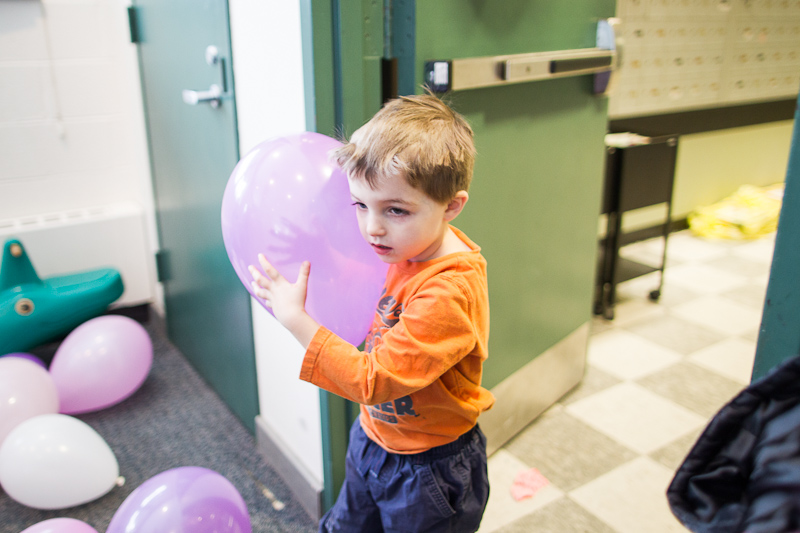
Boy with Balloon
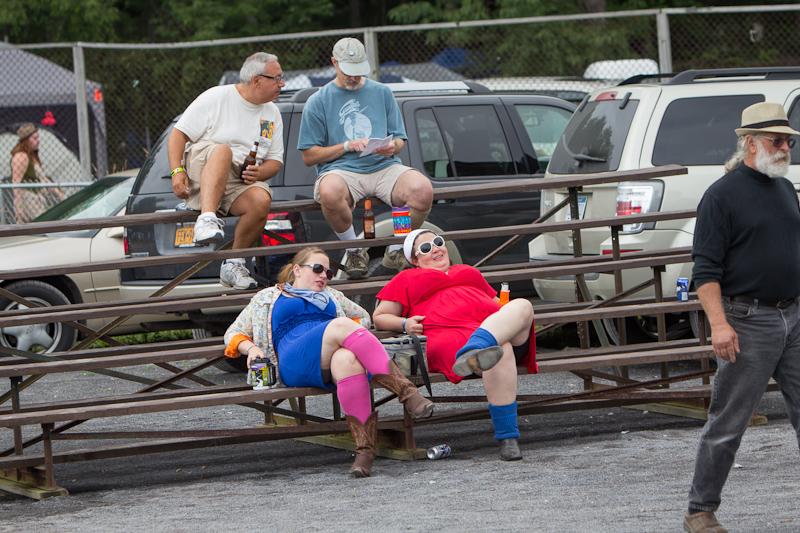
Enjoying the View
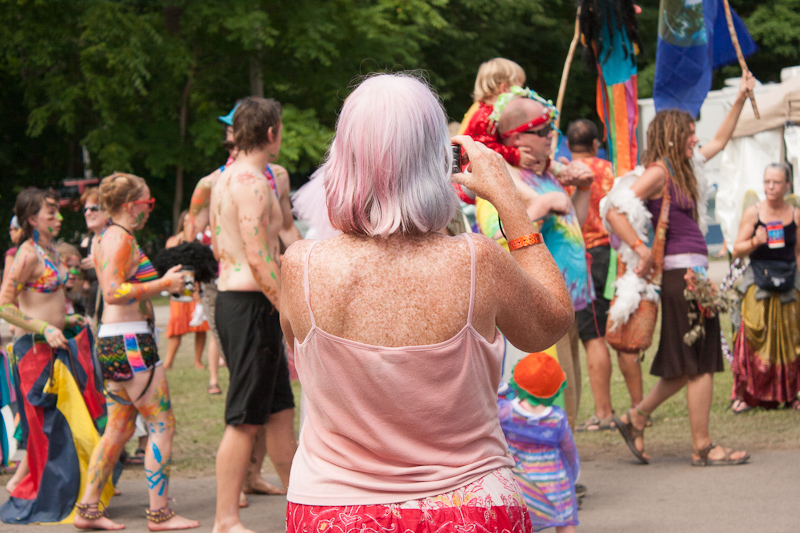
Freckles in Pink

American Legion
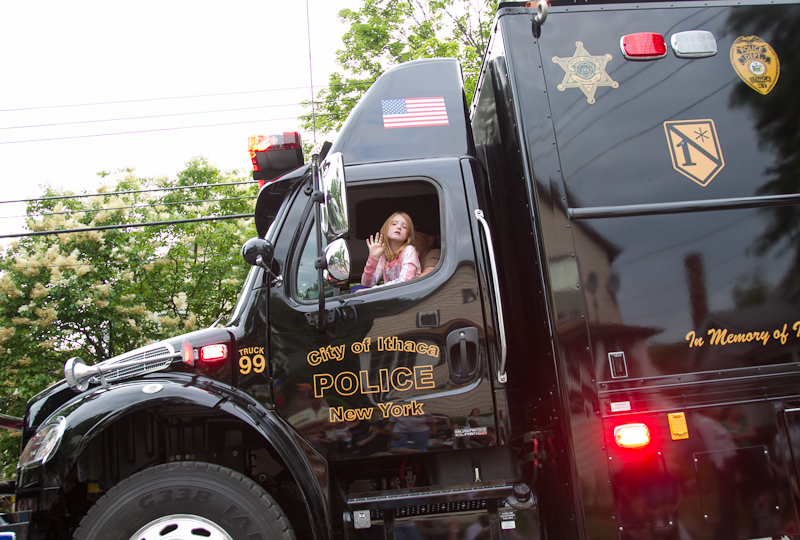
City of Ithaca Police Truck
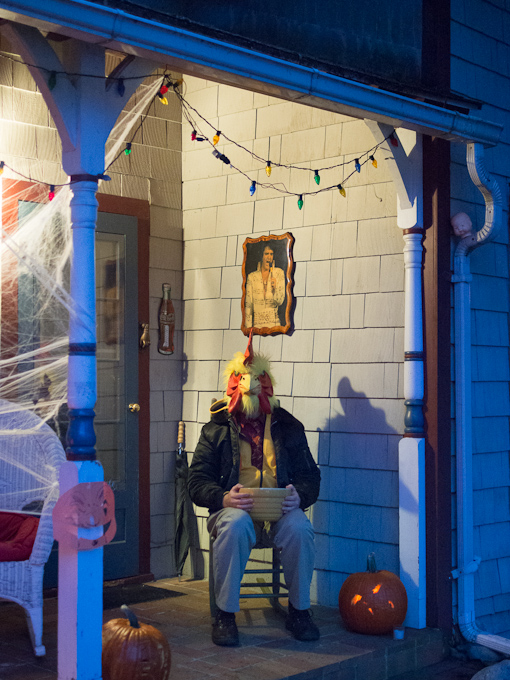
Elvis and the Guy in the Chicken Suit (Brooktondale, NY, October 31, 2012)


Visit Michael's Art Photography Portfolio at SaatchiArt.com!

Art Photography Elitism

25 Friday Jan 2013

Posted by mgm in Commentary

≈ Comments Off on Art Photography Elitism

Tags

art, elitism, photography

Share

Photography with artistic aspirations exists on a scale from quite subtle (sterile even) to wildly showy and dramatic. If you’re not feeling particularly “sensitive” at a particular moment, the subtle/sterile stuff can seem quite mundane, boring and easily dismissed from further consideration. If you *are* feeling perceptive, then the more dramatic stuff overloads your sensory inputs and you hurriedly dismiss it out of “self-defense” and consider it over-the-top flash.

The more subtle/sterile work tends to be less accessible to a general population, and thus photography elitists take refuge here because of its perceived exclusivity; the more the general population says, “I just don’t get it”, the better the elitists like it because it reifies a distance between their tastes and that of the general population.

Of course, elitists sometimes find themselves drawn to the less subtle work; but as long as they keep it to themselves and not let it bleed out into the work they select or create for display, they can privately enjoy their rendezvous with less sophisticated imagery.


Visit Michael's Art Photography Portfolio at SaatchiArt.com!

Aesthetics in Photography

11 Friday Jan 2013

Posted by mgm in Commentary

≈ Comments Off on Aesthetics in Photography

Tags

aesthetics, content, meaning, photography

Share

There’s a significant difference between using aesthetics as a “delivery mechanism” for the content of a photograph versus making aesthetics (i.e., look, style, eye-catchiness) the primary purpose of a photograph. The latter is short-lived and makes a photo easily forgotten.


Visit Michael's Art Photography Portfolio at SaatchiArt.com!

The Devaluing of Photography

12 Wednesday Sep 2012

Posted by mgm in Commentary

≈ Comments Off on The Devaluing of Photography

Tags

devaluing, oversupply, photography

Share

With so much “photography” happening, it’s easy to think that photographs will (have) become totally devalued, making it very difficult for a photographer to make a living. However, if you look at photography as simply a (visual) language, it’s not the medium but the “story” that’s important; and that “story” should be as unique as the photographer him/herself, and as interesting as what the photographer has within him/her to say.

Has the overwhelming prevalence of speech and written language undercut the value of stories, speeches, history, or literature?


Visit Michael's Art Photography Portfolio at SaatchiArt.com!

Shooting Photos for Entertainment

24 Tuesday Jul 2012

Posted by mgm in All, Commentary

≈ Comments Off on Shooting Photos for Entertainment

Tags

entertainment, impress, people, photography

Share

As a photographer (when not shooting for a client):

I don’t shoot to impress people; I shoot to entertain myself.

Impressing a few people along the way is nice, but I find it a poor source of motivation for the long run.


Visit Michael's Art Photography Portfolio at SaatchiArt.com!

← Older posts
Newer posts →

MGM’s Twitter Feed

Subscribe to this blog!

 Subscribe via your own reader

Hosted by:

Recent Posts

  • My Latest Photos and Tweets
  • Fall Fashion (Oct 2019) by Michael Grace-Martin
  • Smithsonian Center for American Art, Washington DC (July 2016)
  • The Great New York State Fair, Syracuse, NY (Sept 2016)
  • 2016 Ithaca Festival Parade
Easy way to support this site: Buy Toilet Paper!

Proudly powered by WordPress Theme: Chateau by Ignacio Ricci.