
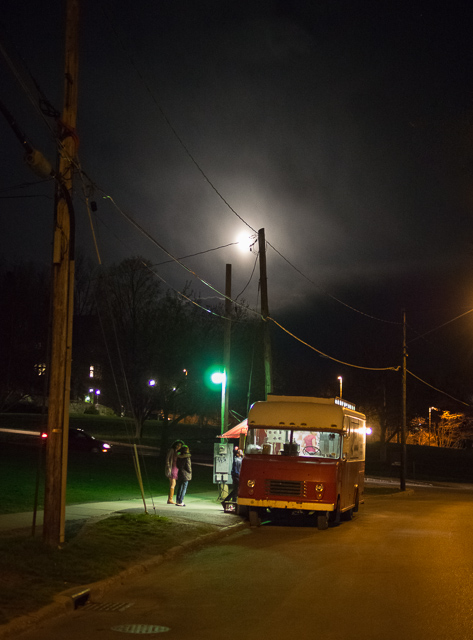
Louie’s Lunch Truck at 9:30pm, Ithaca, NY (April 2013)
Click image..
 Visit Michael's Art Photography Portfolio at SaatchiArt.com! |
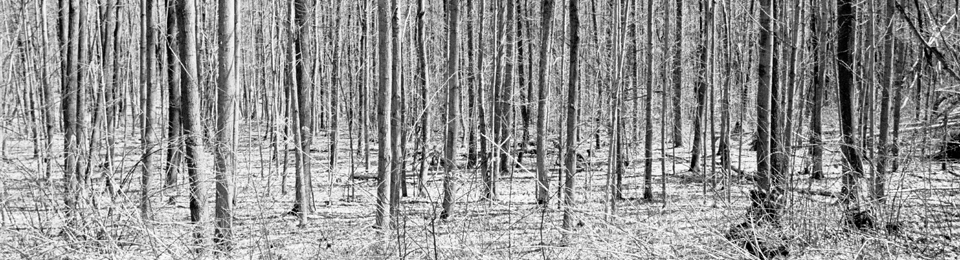
27 Saturday Apr 2013
Posted in MGM's Photos, Street
≈ Comments Off on Louie’s Lunch Truck at 9:30pm
Louie’s Lunch Truck at 9:30pm, Ithaca, NY (April 2013)
|
Visit Michael's Art Photography Portfolio at SaatchiArt.com! |
11 Thursday Apr 2013
Posted in Commentary
≈ Comments Off on The New “Art” of Posting Photos Online
Tags
Taking and posting photos online is like riffing on a musical instrument. It’s more about a distinctive, engaging and dynamic stream of stimulation than it is about capturing and focusing on one particular static object or moment.
It’s a new art form borne of the digital age: the Art of Posting Photos Online.
|
Visit Michael's Art Photography Portfolio at SaatchiArt.com! |
29 Friday Mar 2013
Posted in Commentary
≈ Comments Off on Photography as “Visual Gimmickry”
Tags
Yesterday, I saw a lecture on Literary Gimmicks (I was photographing the event). It struck me that much of photography is “visual gimmickry”….and would I be satisfied with photography if that was all I was doing with it?
|
Visit Michael's Art Photography Portfolio at SaatchiArt.com! |
29 Friday Mar 2013
Posted in Commentary
Tags
It occurred to me this morning that the explosion of photos online is making photos more like videos in that each “frame” is a very transient stimulus only experienced and enjoyed very briefly by the viewer before moving on to the next–i.e., with many frames to go through, people will tend not to dwell very long on any one of them. I can’t help but think that this will make the photo *series* more important than individual stills because it’s the *trajectory* that is becoming the more meaningful unit or object of focus.
|
Visit Michael's Art Photography Portfolio at SaatchiArt.com! |
19 Tuesday Mar 2013
Posted in Fashion/Glamour, MGM's Photos, Street
≈ Comments Off on 2013 Winter Photo Project Recap
Tags
To keep myself busy photographically during the cold and “dead” Northeast Winter, I planned and completed three photography projects this past Winter:
After briefly considering doing 3 photography projects per season, I’ve decided against it because, beginning in Spring, I start doing a *lot* more client and event photography!
So, though I’ll still be doing some planned photo projects (I’m sure), the pace will slow down….until next Winter…:-).
|
Visit Michael's Art Photography Portfolio at SaatchiArt.com! |
16 Saturday Mar 2013
Posted in Commentary
≈ Comments Off on Creating a “Hit” in Photography
Tags
I’ve decided my best way to generate “hits” (which for me means: meaningful and potentially popular creative works) is through the doing of photography. I’m not a musician or fiction writer, but I have been doing photography quite seriously over the past 8 years; so photography is my medium.
Deciding on photography isn’t enough though. What are you going to do with it? Two important questions-decisions come to mind:
1) Target Output: individual photo or photo series?
There’s no doubt that an individual photo can be a “hit”; there have been some famous individual photographs by the likes of Richard Avedon, Ansel Adams, and Henri Cartier-Bresson to name a few.
But a single photograph is typically visually “absorbed” in seconds. Perhaps, if multiple things are going on in the photo, someone may spend a whole minute looking at it; but I think that’s the exception rather than the rule. The barrage of images people face on the Internet may be one reason people spend so little time looking at any one image.
It’s difficult for one photo to communicate anything too complicated. Stories and even songs–it seems to me–can deal with relatively complex issues or concepts.
Photos tend to focus on one very simplified aspect of a scene. In fact, photos that don’t do so, are typically criticized for being “unfocused” and not compelling. (That “focusing” is so central to the technology of photo making may have something to do with the preference for simplification.) So, a photograph is typically none too complex.
A photograph is a single frame of unchanging visual information; this is both a strength (allows one to closely examine a frozen scene in much detail) and a weakness (nothing is changing; so once you’ve visually processed the scene, you tend to lose interest in it).
A photo can initially hold attention, much like the hearing of a new pun. But like a pun, interest often wanes quickly upon repeat viewings/hearings–i.e., it has a fairly steep interest drop-off curve.
If there’s more to the photograph than mere visual excitation (e.g., it’s a photo of a loved one or of a place that’s been an important part of ones life), then the drop-off may be much less severe.
If you move on to a series of photos (versus a single photo), at least 2 additional features are introduced: 1) viewing is required over more time and/or space (for example, in a gallery, slide show, or over a sequence of pages in a book), and 2) multiple representations (photos) are presented (which can be helpful in solidifying a central concept or branching out to portray a more complicated idea framework).
At the very least, more photos means more content. Whether this additional content is used wisely to expand upon or reinforce a concept or, contrarily, to provide unnecessary and/or unwanted redundancy (or introduce irrelevancy or distractions) is the primary challenge of doing a series.
Personally, I have found that doing photo series (versus one shot “wonders”) is more work (especially in terms of editing), but also, more rewarding; I think the latter is due mostly to being able to develop a concept more fully and building a larger coherent piece of creative work; it’s like the satisfaction of having completed a successful novel compared to a short story.
When I work on a photo series, I feel like I’m working at the level of producing a movie or a song. The photos extend over time (and space) and provide a sequence of “scenes”.
This unit of output (the series) suits my ideas and is also a natural evolution from my background in event photography, where you shoot and edit a set of photos that represents a single wedding, bar mitzvah, fashion show, etc.
(For more on this topic, also see this post)
2) Control: Planned or Candid?
Another important choice that has to be made is whether the photos will be planned or candid. Street photography is usually candid, much like the candid event photography I typically do (I seldom “pose” people at events).
I like candid photography: it’s more authentic and interesting from a “social scientist’s” viewpoint (I have a background in both psychology and communication).
That said, I also have at least two issues with it:
What’s wrong with reacting to and grabbing whatever meaningful–if commonly less than ideal aesthetically or coherently–content you can find? Two things: 1) inefficiency and 2) tenuous control over the message/meaning.
You can easily spend a lot of time looking for ideal situations to develop in order to photograph them. Timewise–and effortwise–it’s not very efficient.
Or…you can set things up in terms of light, elements & characters in the scene, setting, composition, and so forth just the way you want them and then shoot them and be done.
In terms of message or meaning…sure, you can locate things in a scene that communicate a message or viewpoint consistent with your ideas and values. However, you are at the mercy of what’s going on in front of you. Maybe you’ll see something that is consistent with your ideas; maybe you won’t. Maybe you’ll be so desperate to find something meaningful, you’ll try to force meaning on ambiguous scenes so that at least you’ve captured something, even when it’s not a true representation of what you’d like to communicate.
I do candid photography quite often; I like candid photography. However, when I’ve got a message I’d like to communicate via photography, attempting to find an ideal visual representation of that message in a scene over which I have no control is not usually effective.
Imagine trying to write a story or song only with words or sounds that just happen to appear in front of you as you sat there trying to compose something? Sure, a random word or sound might be the inspiration for a story or song; but at some point the author of the story or song has to become proactive and make the composition happen from inside their brain. To me, this is why I have to construct scenarios and scenes and then photograph them–in order to accurately render (with photos) a message that is coming from within me.
Conclusion
The way I see it, composing “hits” is typically a proactive activity where the “author” initiates and guides the production of the content. Though “art” can conceivably be produced as a reactive activity, it gives the artist less control over the process, the message, and the structure of the final product.
Paintings can be masterpieces, and paintings are typically one-frame visual representations. Why not produce one-frame photo masterpieces?
This latter aspect is more of a personal preference. A single frame “masterpiece” can be produced; it does happen. However, for me to be satisfied with one frame, I’d have to make it quite “layered” to get in the depth of content I’d want to communicate…and photographs, as opposed to paintings, tend to be more simplified and focused (as I discussed previously) on a single facet of a scene.
There are certainly photos that operate more at a overall scene level and include lots of simultaneous details and actions; I happen to like those types of photos. But these seem to be the exception. Usually, again, photos are very focused on a single person or action in a scene. Even landscape photos tend to focus on a simple overall shape, “texture”, color/color-combo, or pattern. There is clearly a maxim in photography that “simpler is better”.
So, if people tend to prefer simple photographs, my best way to present depth or complexity with photography is via a series of photos.
Therefore, if I want to create a meaningful (to me) “hit” using photography, a planned photo series seems the way to go!
|
Visit Michael's Art Photography Portfolio at SaatchiArt.com! |
10 Sunday Mar 2013
Posted in Fashion/Glamour, MGM's Photos
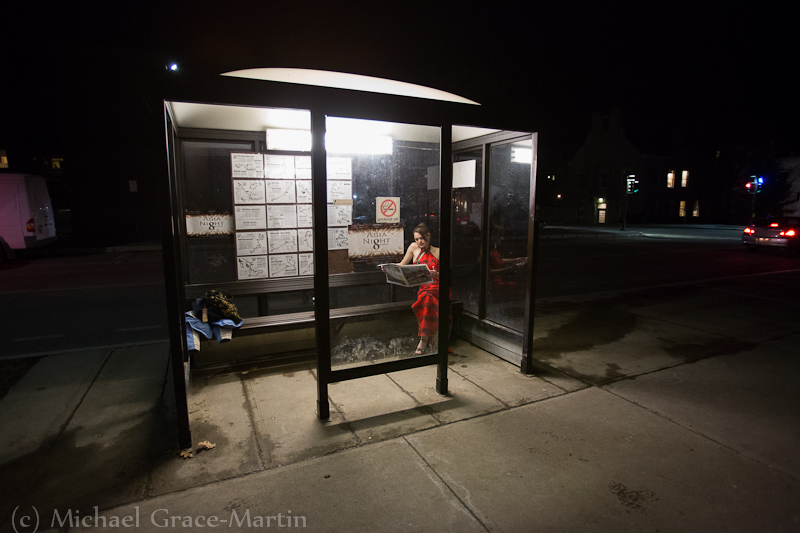
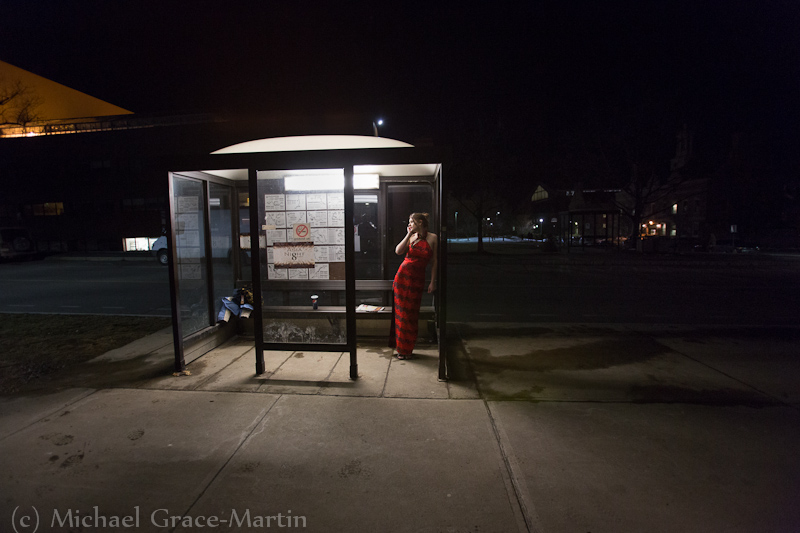
≈ Comments Off on Nighttime Bus Stop by Michael Grace-Martin
Tags
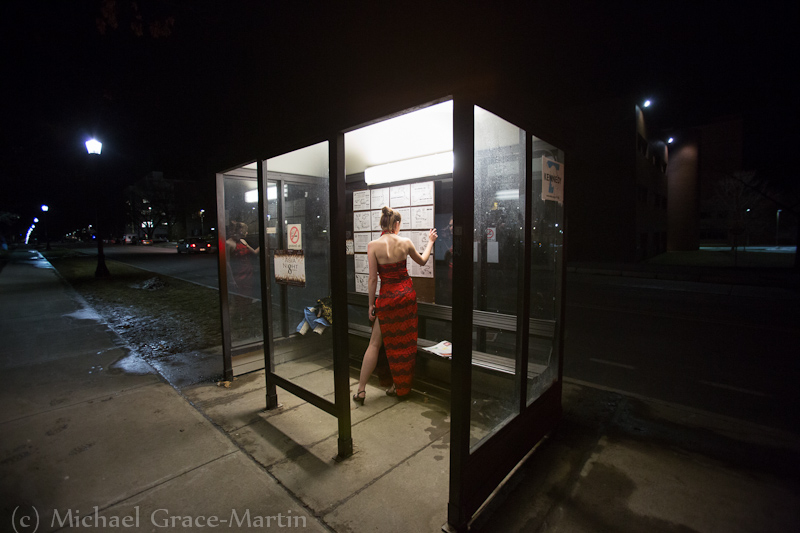
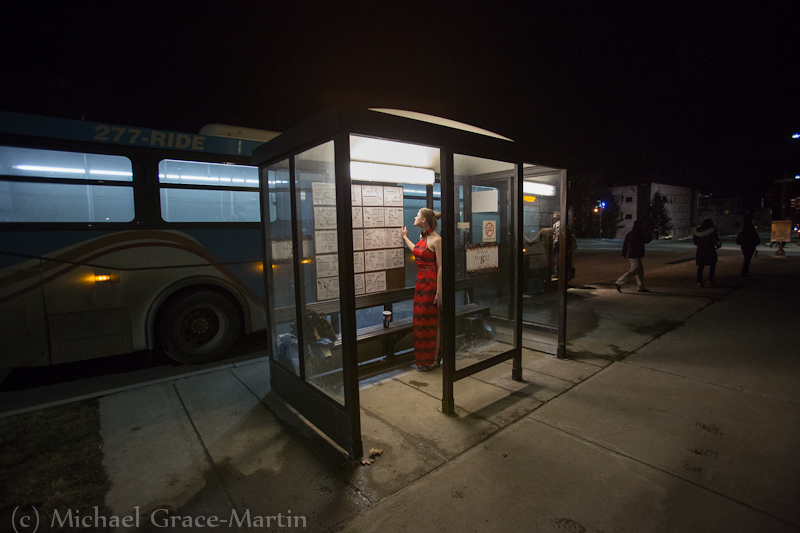
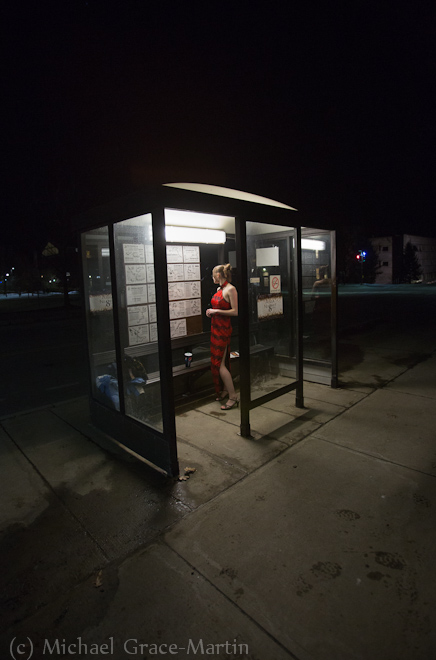
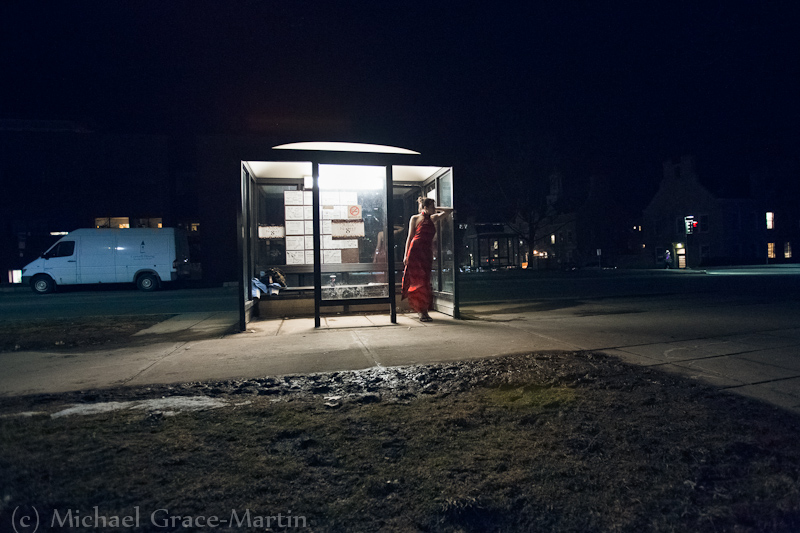
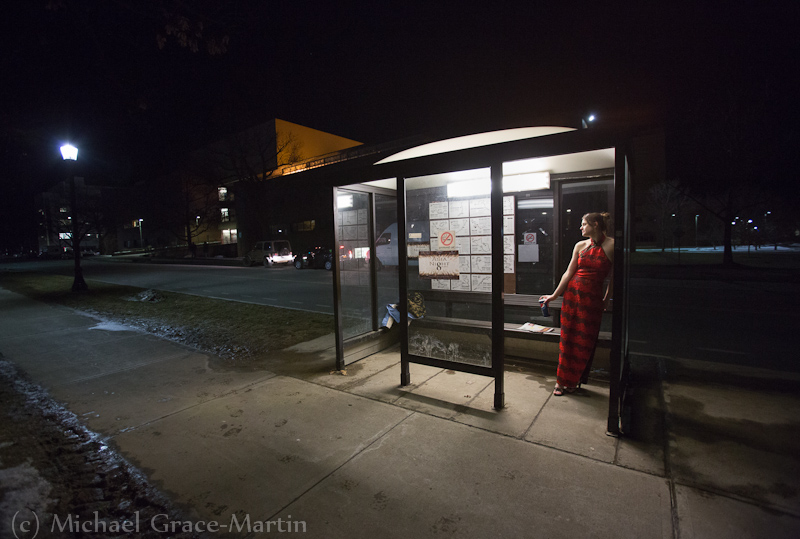
A few of my favorites from a session I did the other night…(my fingers were achingly cold and she was a trouper wearing just that dress…:).
|
Visit Michael's Art Photography Portfolio at SaatchiArt.com! |
10 Sunday Mar 2013
Posted in Commentary, Interviews
≈ Comments Off on Doing Nude & Erotic Photography: Professionalism
Tags
This morning, I saw the following video interview with a photographer who does “erotic photography”:
The comment that caught my attention was this:
There are times when I am shooting and I have a camera and I get home and I start editing the pictures and I’m like ‘wow, that was really hot. I can’t believe I was there!’
When you’re shooting a fine art nude or erotic photography session, you have to have your mind fully on the task at hand; to get good, professional results, you have to be all-business in both your approach to the session and your interaction with the model.
It’s only afterward–when you’re editing the photos–that you can finally let your professional “guard” down and let in the emotions and sensations that would normally accompany such a social situation, at least a little bit…:-).
|
Visit Michael's Art Photography Portfolio at SaatchiArt.com! |
08 Friday Mar 2013
Posted in Fashion/Glamour, MGM's Photos
≈ Comments Off on Selling Mens Underwear Outtake
Tags
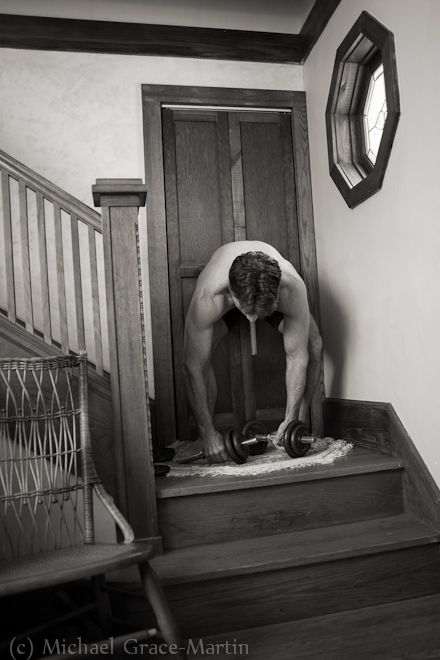
When you’re taking self-portraits, you’re bound to get some miscues. Here’s one from the Selling Mens Underwear project that I found quite humorous…:-).
Click image..
|
Visit Michael's Art Photography Portfolio at SaatchiArt.com! |
01 Friday Mar 2013
Posted in Fashion/Glamour, MGM's Photos
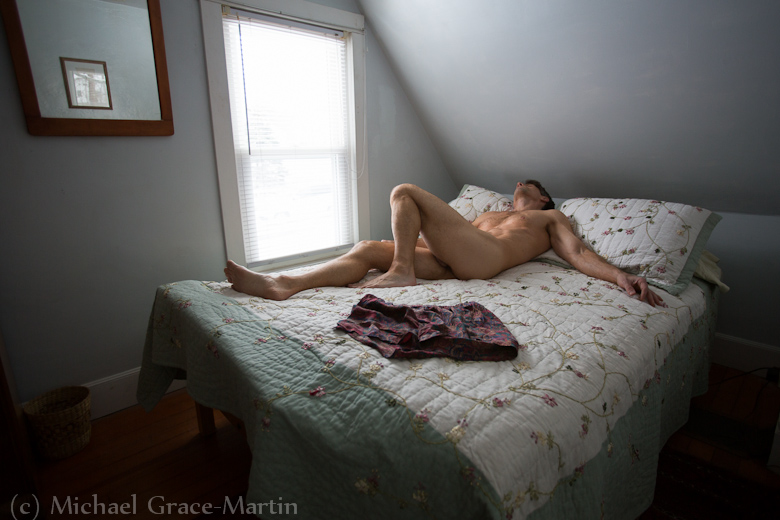
I turned 50 this year. So what?
When I was in my 30s, I lived in California and worked out a lot. I got to be pretty “buff” and a friend told my girlfriend at the time (now my wife) that I should model mens underwear. I thought this was a pretty funny suggestion (I was in grad school at the time), but eventually actually went as far as having a fellow grad student take some photos for a small portfolio, and even meeting with a modeling agency in LA! (Once I found out how much it cost, I decided not to go that route.)
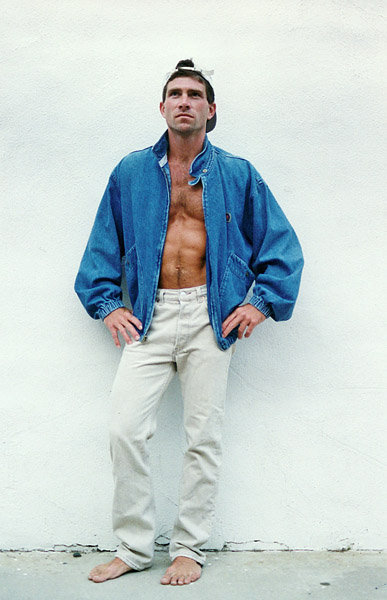
One of my “modeling” photos (circa 1996)
Other than posting some model photos on the Internet (a very new thing at the time), I never actually got a modeling gig and quickly put the whole idea behind me. Life went on, including getting married, moving to Upstate New York, and having two children.
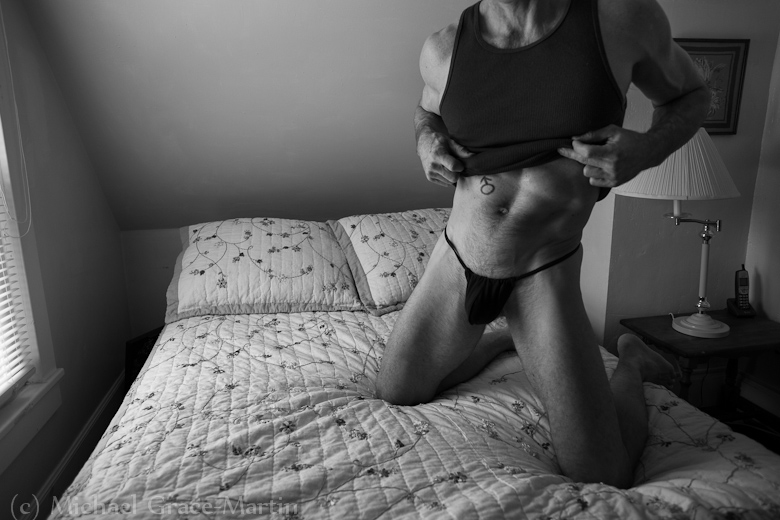
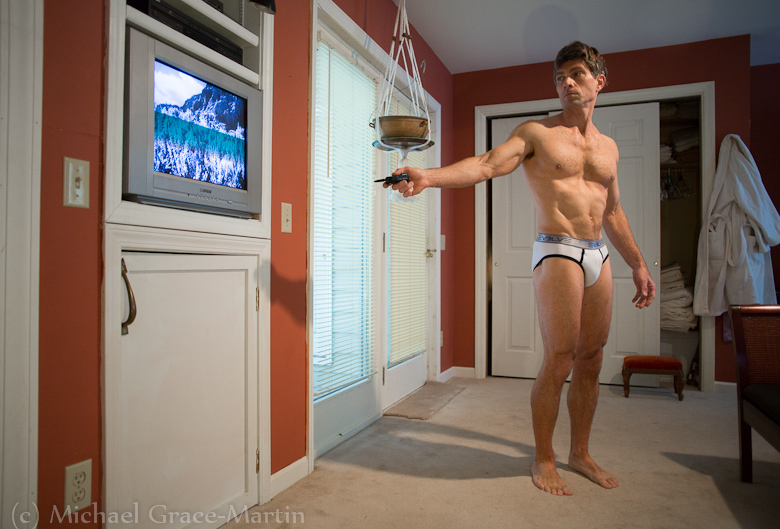
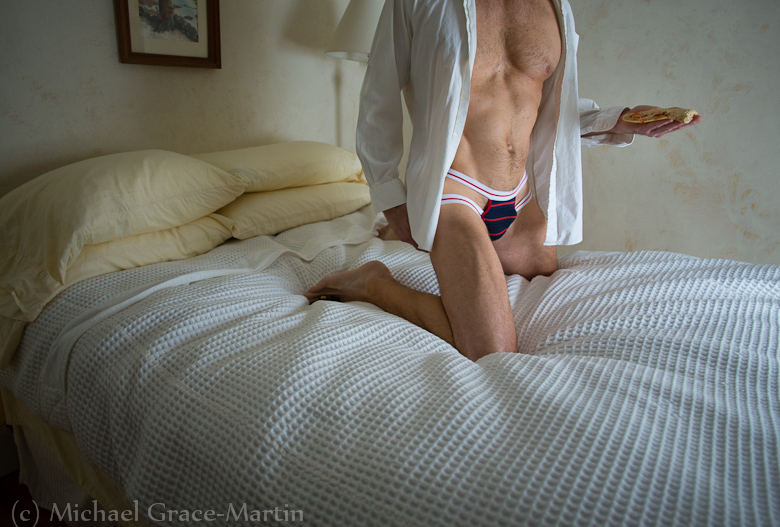
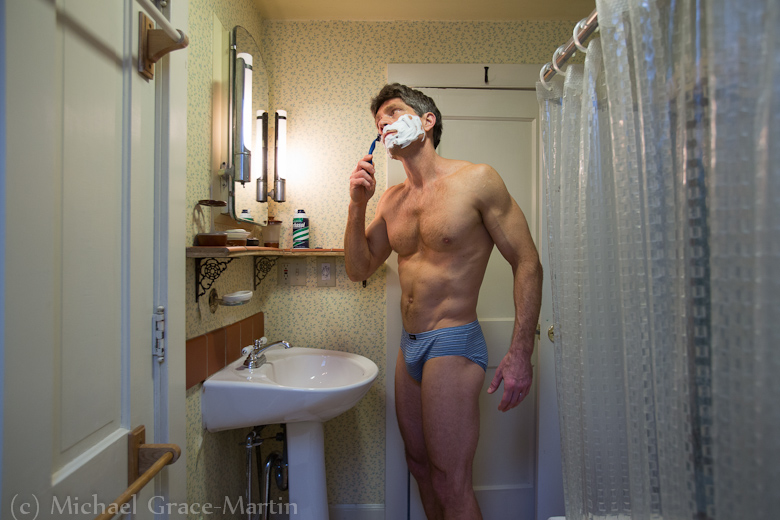
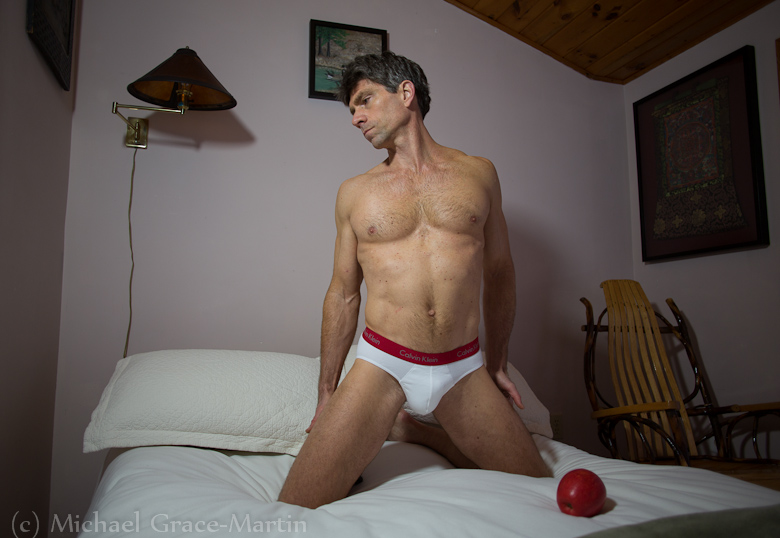
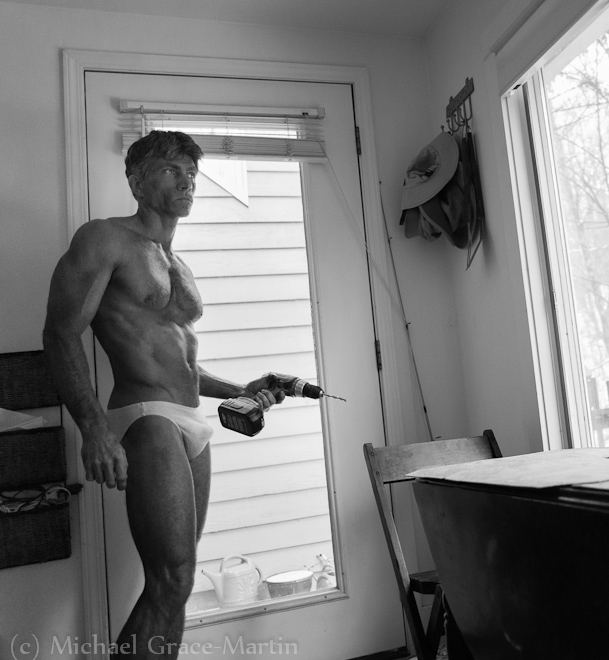
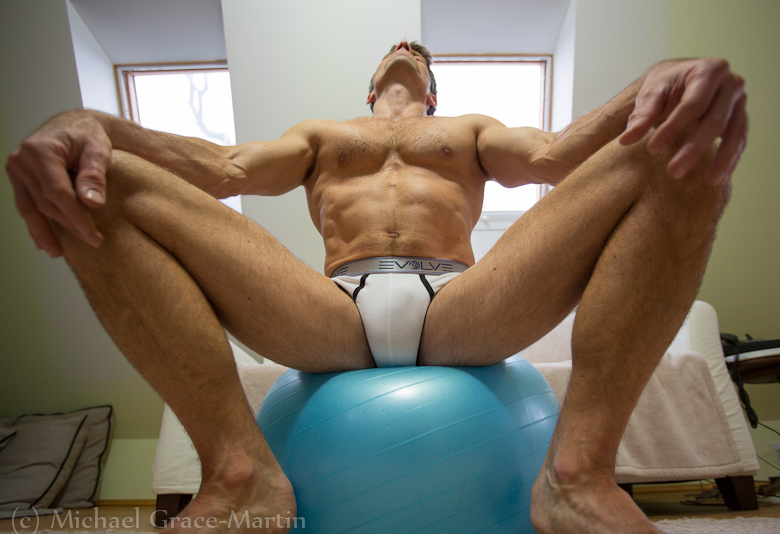
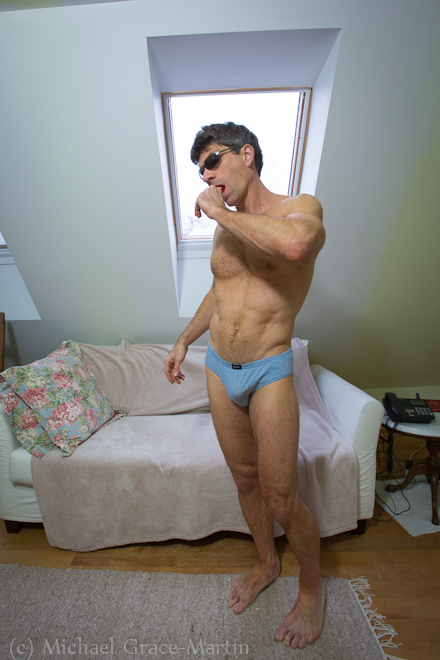
Well…upon turning 50 this past year, I wanted to commemorate the occasion photographically. I knew I wanted to do a self-portrait series (partially inspired by the work of Cindy Sherman and Francesca Woodman), but I was having a hard time deciding on what sort of series.
Then I remembered how Jim Palmer (a very successful pitcher with the Baltimore Orioles) famously modeled Jockey underwear…which I thought he did in his 50s *after* retiring from baseball. (It turns out I was wrong; he was actually in his 30s and 40s…though maybe he did it as late as his early 50s? I’m not sure anymore!) That combined with my early failed attempt at underwear modeling clinched it for me: I would do a series on mens underwear ads.
For this series, I looked at all the mens underwear ads I could find. (Did you know there are people selling vintage mens underwear ads at eBay?)
Mens underwear ads used to be very straightforward and boring (with most of the models wearing “tighty whities” or boxer shorts and t-shirts). The ads Jim Palmer did were a bit more sexy; he was tan and wearing bikini briefs, but simply sitting on the edge of a box in front of a plain backdrop looking at the camera. Provocative for the times, but still relatively mild.
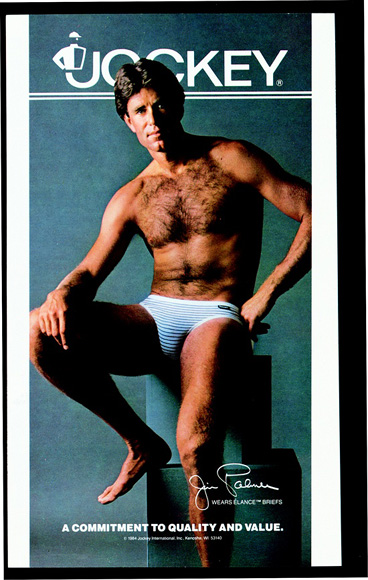
Jim Palmer in Jockey Briefs in the 1980s
Over the years, the ads–and the underwear–have gotten more sexy, blatant (“in your face”) and have even managed to slip in some nudity–i.e., where the model isn’t even wearing underwear, but the underwear are somewhere in the “scene” (this, in particular, makes me chuckle).
The settings in the ads range widely, but can be exotic locations (like Mediterranean beaches), luxurious bedrooms, or near eye-catching architecture. It seems to me the places where men are usually in their underwear are a bit more “pedestrian”. But do commonplace locations not sell underwear??
So for this, my 50th year, I decided to do my own “take” on mens underwear ads to see how much I could capture of the spirit of the current ads out there, as well as honing them a bit to be more realistic, or…perhaps, uh…more “preposterous”?…:-).
NEW!
You can now purchase some of the underwear used in this photo series! Go to my Amazon Associates store to buy them now. The small amount I receive from each purchase helps to support this website…:).
[Addendum (3/3/13):
I’m realizing that it can be very tricky doing a self-portrait project that isn’t viewed as an outright, attention-getting vanity performance. From my perspective, I was using a model to whom I have exclusive access, was ready when I needed him, and who I didn’t even have to worry about paying. I was a great resource for myself to do a photo project, and I don’t want to have to shy away from using this model just because he’s me.]
5/1/2013: One other point I’d like to add: I trained for this shoot like I was Sylvester Stallone training for a Rocky movie! I really pushed myself in workouts and did extra sessions during the two weeks leading up to the shoot. I also applied self-tanning lotion until I started turning orange! (my orange skin was getting looks at the gym, I could tell…:p) I guess my point is that I really worked for this and it wasn’t easy.
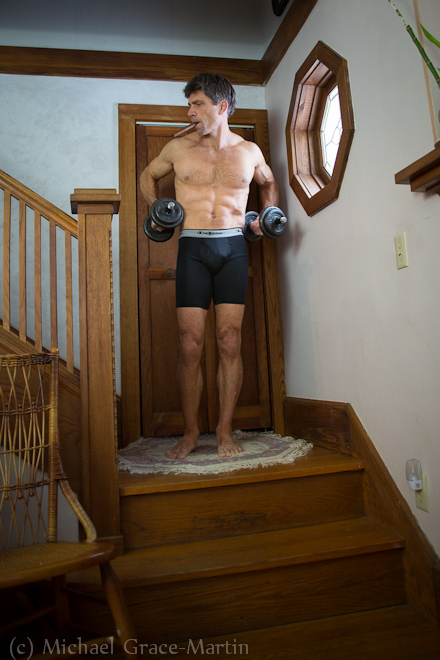
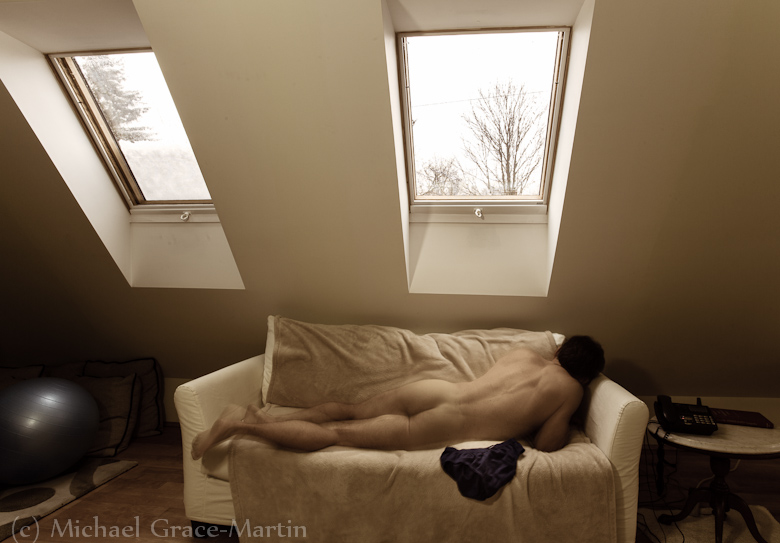
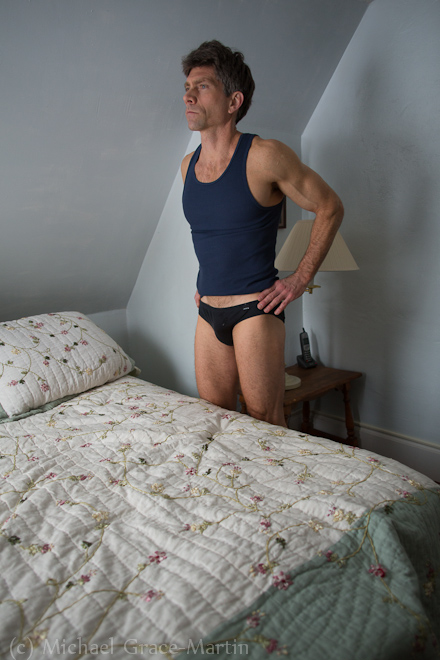
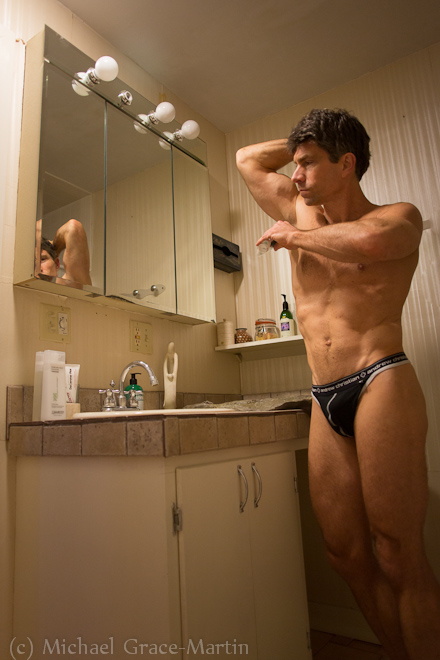

|
Visit Michael's Art Photography Portfolio at SaatchiArt.com! |